



CNC EDM Components
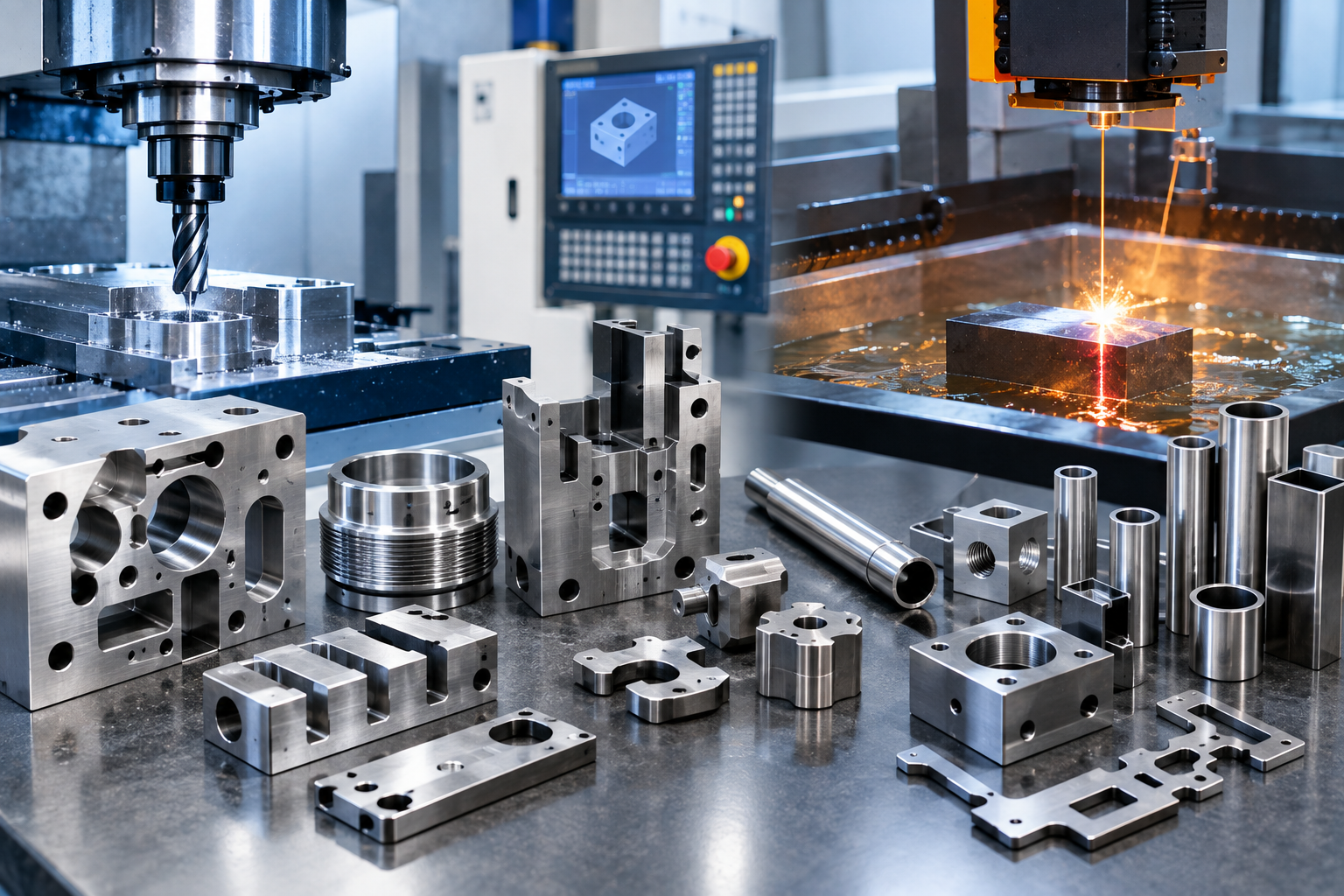
CNC EDM Components are precision-engineered parts manufactured using advanced CNC machining and Electrical Discharge Machining (EDM) processes for applications where complex geometry, tight tolerances, intricate profiles, and high dimensional accuracy are required.
Pitrukrupa Engineering provides precision manufacturing solutions for CNC EDM Components according to customer drawings, CAD models, technical specifications, material requirements, dimensions, and application needs. Combining controlled CNC machining capabilities with EDM processes allows complex components to be produced with accurate features that may be difficult to achieve through conventional machining alone.
CNC EDM technology is particularly useful for components requiring intricate cavities, narrow slots, sharp internal features, complex profiles, small holes, and detailed geometries. Depending on the component design, Wire EDM, CNC EDM machining, and conventional CNC machining can be selected individually or combined to achieve the required result.
For manufacturers operating in tooling, automotive, aerospace, engineering, die and mould, electrical, electronics, and industrial machinery sectors, choosing the right manufacturing process is important for achieving repeatable and reliable component performance.
What Are CNC EDM Components?
CNC EDM Components are precision parts manufactured using computer-controlled machining and electrical discharge machining technologies.
EDM removes electrically conductive material through controlled electrical discharges between an electrode and the workpiece. Since the cutting action does not depend on conventional mechanical cutting forces in the same way as milling or turning, EDM can be highly useful for producing intricate features in hard or difficult-to-machine conductive materials.
Depending on the design, CNC EDM components can include:- Precision inserts
- Die components
- Mould components
- Tooling parts
- Complex profiles
- Slots and narrow openings
- Precision punches
- Small holes
- Industrial machine components
- Custom engineering parts
The final manufacturing process depends on component geometry, material, tolerance, surface requirements, and production quantity.
CNC EDM Component Manufacturing
Manufacturing CNC EDM Components starts with understanding the complete technical requirement of the component.
Important inputs can include:- Customer drawings
- CAD models
- Material specifications
- Component dimensions
- Geometric tolerances
- Surface finish requirements
- Critical features
- Production quantity
- Application requirements
The manufacturing strategy can then be planned according to the component's geometry and the most appropriate combination of CNC machining and EDM processes.
CNC EDM Machining Process
A controlled CNC EDM manufacturing process generally involves several stages.
1. Drawing and Design Analysis
The first stage involves reviewing the component drawing or CAD model.
Critical features such as slots, profiles, holes, corners, cavities, dimensions, and tolerances are identified before manufacturing begins.
2. Material Selection
EDM is suitable for electrically conductive materials. Depending on the application, materials can include:- Tool steel
- Hardened steel
- Stainless steel
- Alloy steel
- Carbide
- Aluminium
- Copper
- Other electrically conductive engineering materials
Material selection depends on the required strength, hardness, corrosion resistance, wear resistance, conductivity, and operating environment.
3. CNC Machining Preparation
Where required, conventional CNC machining can be used to prepare the workpiece or manufacture features that are more efficiently produced through milling, turning, drilling, or other machining operations.
4. EDM Setup
The workpiece is accurately positioned and secured in the EDM machine. The required cutting parameters are established according to the material, geometry, and required accuracy.
5. Electrical Discharge Machining
Controlled electrical discharges remove material from the workpiece according to the programmed geometry.
The process can be used for complex profiles, narrow slots, intricate shapes, and other difficult-to-machine features.
6. Dimensional Inspection
The finished component is inspected against the specified dimensions and tolerances.
- Overall dimensions
- Profile geometry
- Hole size
- Slot width
- Feature location
- Surface finish
- Component alignment
7. Finishing and Delivery
Additional machining or finishing operations can be carried out where required before the component is prepared for delivery.
Types of CNC EDM Components
Different EDM technologies can be used depending on component geometry and manufacturing requirements.
Wire EDM Components
Wire EDM uses a continuously moving electrically conductive wire as an electrode to cut precise profiles through conductive workpieces.
- Complex profiles
- Precision punches
- Dies
- Inserts
- Narrow slots
- Intricate contours
- Tooling components
The process is particularly valuable when the component requires accurate profile cutting.
CNC EDM Components
CNC EDM machining can be used for producing cavities, contours, slots, holes, and other intricate features using controlled electrical discharge machining.
It is suitable when component geometry requires features that may be challenging to manufacture using conventional cutting tools.
Precision CNC EDM Components
Precision CNC EDM Components are commonly required when component performance depends on accurate dimensions and repeatable geometry.
- Tight dimensional control
- Complex profiles
- Accurate hole positioning
- Narrow slots
- Intricate contours
- Controlled surface finish
- Repeatability
The required tolerance depends on the component design and its functional application.
For precision tooling and engineering components, controlling EDM parameters and maintaining accurate workpiece positioning are important for achieving consistent results.
Custom CNC EDM Components
Not every industrial component can be manufactured using a standard design. Custom CNC EDM Components can be produced according to application-specific drawings and engineering requirements.
- Die inserts
- Mould inserts
- Precision punches
- Tooling components
- Machine parts
- Engineering profiles
- Special-purpose components
The manufacturing process can be planned around the specific geometry, material, tolerance, and quantity required.
Materials Used for CNC EDM Components
EDM works with electrically conductive materials, making it suitable for a variety of engineering metals.
- Tool Steel: Tool steels are frequently used in tooling and die applications where hardness, wear resistance, and dimensional stability are important.
- Hardened Steel: EDM can be useful for machining hardened steel components that may be difficult to process efficiently using conventional cutting methods.
- Stainless Steel: Stainless steel can be selected for applications requiring corrosion resistance and durability.
- Carbide: EDM can be considered for selected carbide components where conventional machining may be challenging.
- Aluminium: Aluminium can also be machined using suitable EDM processes when the component design and electrical characteristics are compatible with the process.
Material selection should always be based on the final application's mechanical and environmental requirements.
Applications of CNC EDM Components
CNC EDM components are used across a wide range of precision manufacturing industries.
- Tool and die manufacturing
- Mould manufacturing
- Automotive components
- Aerospace components
- Defence equipment
- Electrical components
- Industrial machinery
- Precision engineering
- Medical equipment
- General manufacturing
The exact EDM process depends on the component geometry and application.
CNC EDM Components for Automotive Applications
Automotive manufacturing requires precision tooling and components for various production processes.
- Die components
- Mould inserts
- Precision tooling
- Punches
- Forming components
- Complex machine parts
Consistent component geometry is important for maintaining reliable tooling and production performance.
Benefits of CNC EDM Components
Why Choose Pitrukrupa Engineering?
Pitrukrupa Engineering provides precision engineering and manufacturing solutions based on customer-specific component requirements.
- Customer drawings
- CAD data
- Material requirements
- Surface finish
- Production quantity
- Application requirements
The right combination of CNC machining and EDM can be considered according to the individual features of each component.
This engineering-focused approach supports manufacturers looking for custom precision components for tooling, machinery, automotive, aerospace, electrical, electronics, and other industrial applications.
Industries We Serve
- Automotive
- Aerospace
- Defence
- Tool and die
- Mould manufacturing
- Industrial machinery
- Precision engineering
- General manufacturing
Each industry can have different requirements for materials, tolerances, component geometry, and inspection.
Custom CNC EDM Components for Precision Manufacturing
When a component requires complex geometry, controlled tolerances, intricate profiles, or difficult-to-machine features, selecting the right manufacturing process becomes essential.
CNC EDM Components can provide an effective solution for specialized engineering requirements by combining the capabilities of CNC machining with the precision and flexibility of EDM technology.
Pitrukrupa Engineering works with customer drawings and technical specifications to manufacture application-specific components according to the required material, dimensions, tolerances, geometry, and quantity.
Get CNC EDM Components for Your Application
Looking for CNC EDM Components for tooling, automotive, aerospace, industrial machinery, electrical, electronics, or precision engineering applications?
Share your component drawing, CAD file, material specification, dimensions, tolerances, required quantity and application details with Pitrukrupa Engineering to discuss a suitable CNC and EDM manufacturing solution.