



Advanced Aluminum Welding Techniques for High-Strength Industrial Components
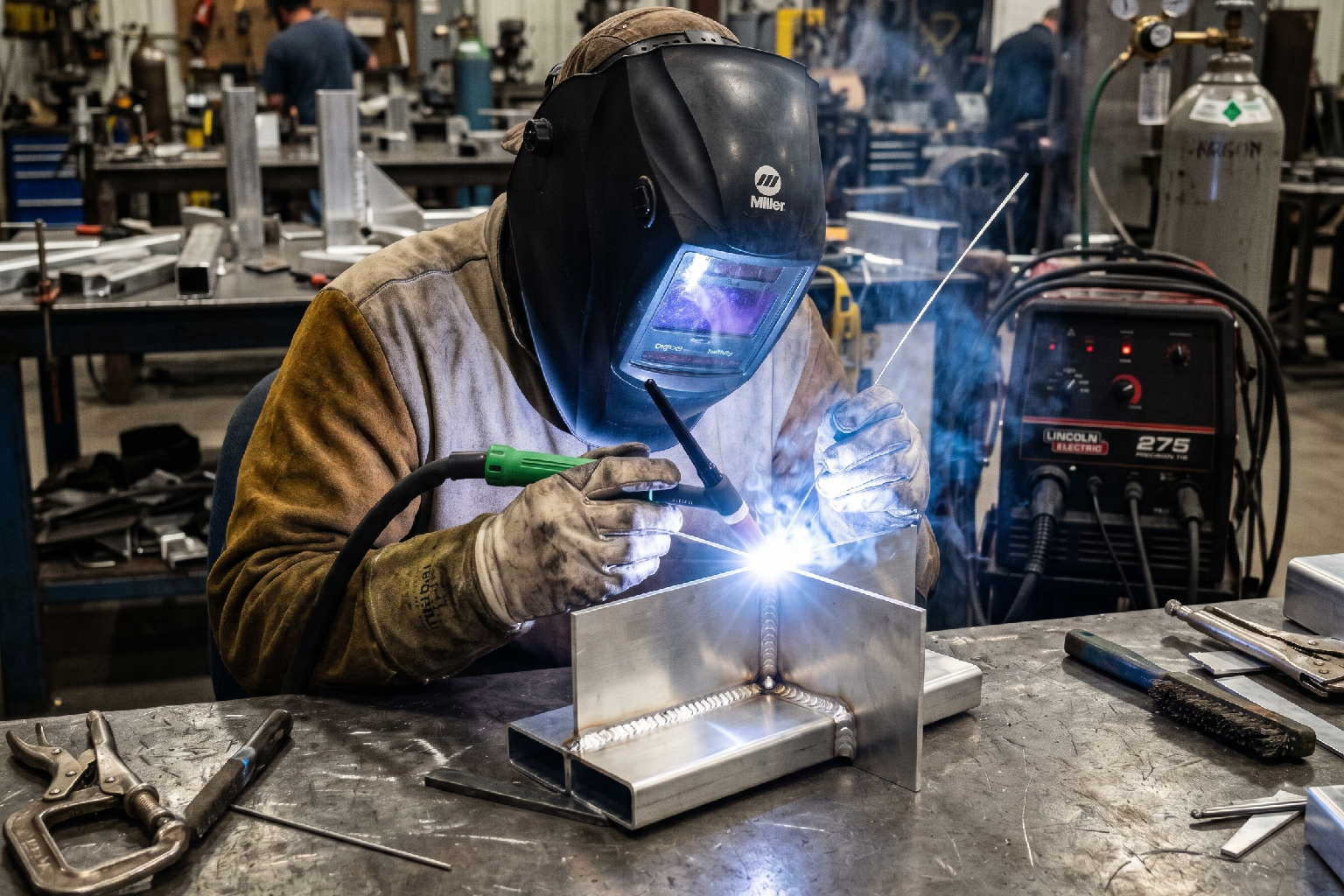
Aluminum Welding Work is a specialized fabrication process used to join aluminum parts using controlled heat and filler materials. Unlike steel, aluminum has a low melting point and a strong oxide layer, making welding more complex. Therefore, precision equipment and skilled technicians are essential to achieve strong and defect-free joints. Industries such as aerospace, defense, automotive, and healthcare rely heavily on aluminum welding due to its strength, reliability, and long-term performance benefits.
What is Aluminum Welding Work?
Aluminum Welding Work refers to the process of fusing aluminum components using heat and pressure, often with filler metals. The process ensures that two or more aluminum parts become a single, unified structure without compromising strength.
This process is commonly used for:
- Structural assemblies
- Frames and housings
- Precision medical components
- Defense-grade equipment parts
Because aluminum is highly reactive, welding must be performed in controlled conditions to avoid contamination and weak joints.
Working Principle
The working principle of Aluminum Welding Work involves melting the base metal along with a compatible filler rod to create a strong metallurgical bond.
1. TIG (Tungsten Inert Gas) Welding
- Uses a non-consumable tungsten electrode
- Provides high precision and clean welds
- Ideal for thin aluminum sheets and detailed components
- Widely used in aerospace and medical applications
2. MIG (Metal Inert Gas) Welding
- Uses a consumable wire electrode
- Faster process compared to TIG welding
- Suitable for thicker aluminum sections
- Common in industrial fabrication and large structures
Both methods use inert gases like argon to protect the weld area from oxidation, ensuring a strong and clean finish.
Technical Specifications
Aluminum Welding Work requires strict control over welding parameters:
- Welding current: AC/DC depending on process
- Shielding gas: Pure Argon or Argon-Helium mix
- Filler materials: Aluminum alloys such as 4045, 5356
- Thickness range: 0.5 mm to heavy structural sections
- Precision tolerance: High-accuracy industrial standards
- Equipment: TIG/MIG welding machines with advanced control systems
These specifications ensure consistent quality and structural integrity.
Available Materials
Aluminum Welding Work can be performed on various aluminum grades and alloys, including:
- Pure aluminum (1xxx series)
- Aluminum-magnesium alloys (5xxx series)
- Aluminum-silicon alloys (4xxx series)
- Aluminum-copper alloys (2xxx series)
- High-strength aerospace-grade aluminum alloys
Each material requires a different welding approach to maintain performance and avoid cracking or distortion.
Applications
Aluminum Welding Work is widely used across multiple industries:
- Defense Industry: Lightweight armored panels, vehicle frames, and equipment housings
- Medical Equipment: Imaging machine frames, surgical tool housings, hospital structures
- Automotive Industry: Engine components, chassis parts, and heat exchangers
- Aerospace: Aircraft panels, structural supports, and interior systems
- Industrial Fabrication: Machinery parts, tanks, and enclosures
Its versatility makes it a preferred choice for high-performance engineering applications.
Benefits
Choosing professional Aluminum Welding Work offers several advantages:
- Lightweight yet strong structural joints
- Excellent corrosion resistance
- High durability under extreme conditions
- Precision finishing with minimal distortion
- Cost-effective long-term performance
- Suitable for critical industries like defense and healthcare
- Improved thermal and electrical conductivity
When executed by experienced engineers, aluminum welding ensures long-lasting reliability and safety.
Conclusion
Aluminum Welding Work plays a crucial role in modern industrial manufacturing, especially where strength, precision, and weight reduction are essential. With advanced TIG and MIG welding capabilities, Pitrukrupa Engineering delivers high-quality welded aluminum components that meet the strict requirements of defense, medical, automotive, and aerospace industries. By combining technical expertise with advanced welding technology, aluminum structures achieve superior performance, durability, and efficiency—making them indispensable in today’s engineering world.